 RidgeSync
Adirondack High Peaks Backpacking Loop, 5-Day Itinerary
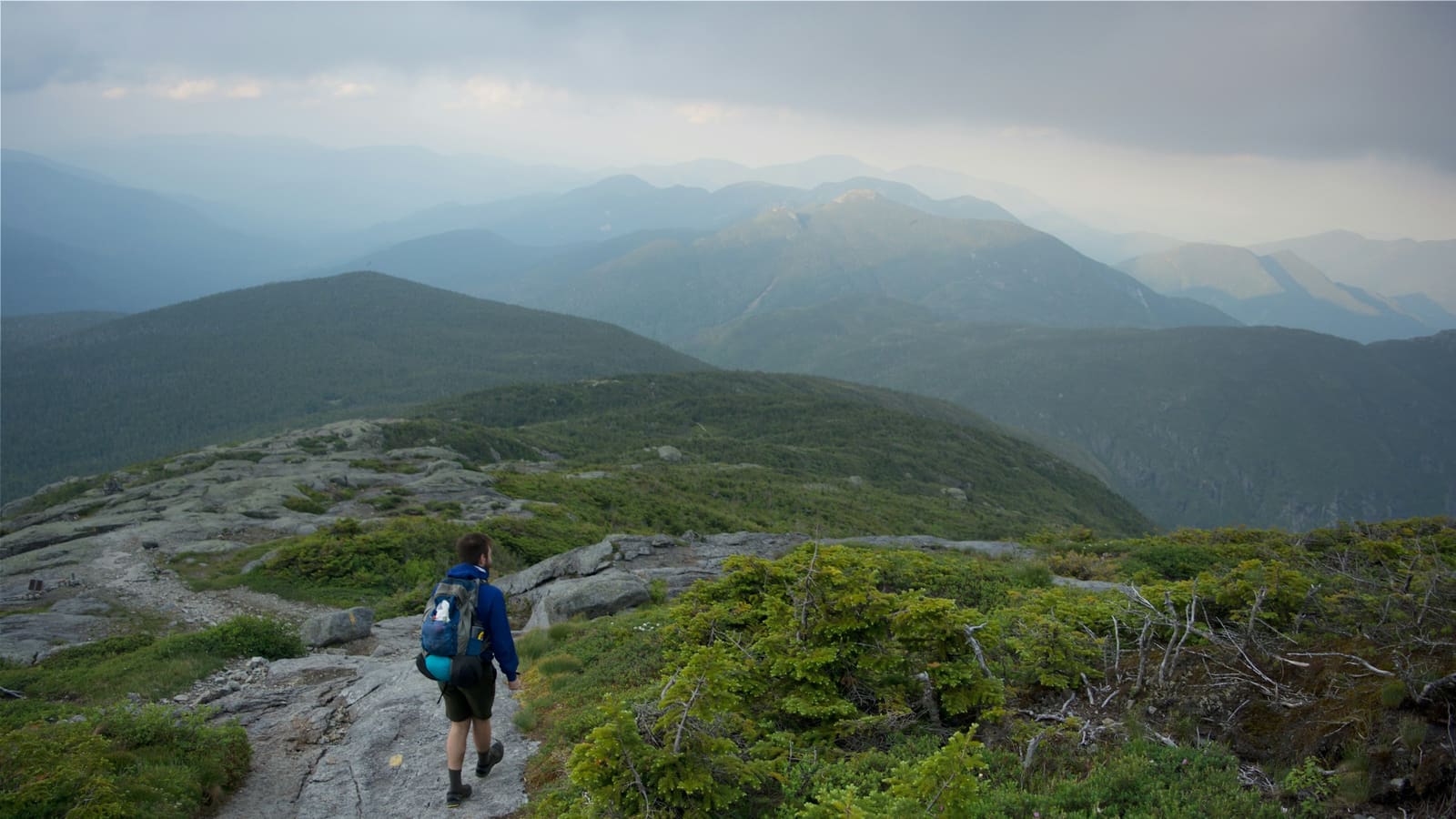
This 35-mile, 5-day loop through New York's High Peaks Wilderness climbs roughly 18,700 ft over its five days, a strenuous itinerary that averages 7 miles and about 3,700 ft of gain per day, with the crux on day four. It's the sample trip that ships inside RidgeSync, which means every number below (mileage splits, elevation, estimated moving time) is computed from the actual trail-snapped route geometry, and you can open the complete plan in the app and adjust it to your own pace.
The High Peaks reward this kind of honest planning: trail miles here are slow, steep, and rocky, and a map-mile plan that works in gentler ranges falls apart fast above the 4,000-foot contour.
Day-by-day itinerary
| Day | Miles | Gain | Loss | Est. time |
|---|---|---|---|---|
| Day 1 | 6 | 3,264 ft | 2,638 ft | 3.6 h |
| Day 2 | 6.8 | 3,491 ft | 2,999 ft | 4 h |
| Day 3 | 6.5 | 4,705 ft | 4,436 ft | 4.5 h |
| Day 4 | 9.2 | 5,318 ft | 6,519 ft | 5.7 h |
| Day 5 | 6.5 | 1,946 ft | 2,100 ft | 3.1 h |
Mileage, elevation, and time are computed from the trail-snapped route geometry in the RidgeSync plan, not hand estimates.
When to go
Mid-June through early October is the reliable window. Late spring is mud season, trails above 2,500 ft are often closed to protect them, and DEC asks hikers to stay low until they dry out. September brings the best combination: firm trails, thin crowds midweek, cold clear nights, and enough daylight for 7-mile mountain days.
Winter turns this into a mountaineering route; don't attempt this itinerary on a three-season plan outside that window.
Regulations you must know
- Bear canisters are required for overnight trips in the Eastern High Peaks Wilderness (roughly April through November), hard-sided canisters only, and rangers do check
- Camp only at designated sites or below 3,500 ft at legal distances from water and trails; no camping above 4,000 ft
- No campfires in the Eastern High Peaks zone, bring a stove
- Group size is capped (8 for overnights); parking at popular trailheads fills before dawn on weekends, and the AMR/Ausable Club lot requires advance reservations in season
There's no fee or lottery for backcountry camping itself, the constraint here is parking and legal campsites, not permits.
Water and camps
Water is rarely a route-changing problem in the High Peaks, brooks and lakes are frequent, but the high traverses run dry, so top off before any ridgeline day and treat everything. Camps in this itinerary sit low by design: each big climbing day starts fresh from a valley camp rather than ending on an exposed col.
If a designated site is taken when you arrive, the legal fallback is descending to the next site or below 3,500 ft, factor that slack into the last hour of your day.
Adjusting this itinerary
Day four is the crux: 9.2 miles with 5,300 ft of gain and 6,500 ft of descent. If that's beyond your range, the natural fix is splitting it and taking a sixth day. Fit parties do the reverse and merge days one and two into a single 12.8-mile opener. Open the plan in RidgeSync and reshape the days; the splits, camps, and totals recompute against the real elevation profile as you adjust them.
If you're new to sizing days like this, start with our guides on how many miles a day backpacking is realistic and backpacking food planning, this loop's canister requirement makes food volume, not just weight, part of the math.
Frequently asked questions
Do you need a permit to backpack the High Peaks?
No permit or fee is required for backcountry camping in the High Peaks Wilderness. The binding constraints are the bear-canister requirement, designated-site camping rules, group-size limits, and trailhead parking, the AMR lot requires advance reservations in season.
What is the best time of year for this loop?
Mid-June through early October. September is the sweet spot: dry trails, cool nights, and midweek solitude. Avoid mud season in May-early June, when high trails are often closed.
How long is the High Peaks loop?
35 miles over 5 days, with about 18,724 ft of total elevation gain.
How many days do you need for the High Peaks loop?
This itinerary splits the route into 5 days, averaging 7.0 miles and 3,745 ft of climbing per day.
How hard is the High Peaks loop?
With 535 ft of gain per mile on average, this is a strenuous route. Daily estimated moving time is 4.2 hours, before breaks.